

My Name Is Not "Liability"
How treating people in Recovery and Reentry as a threat awakens Stigma

Recently, one of my readers and fellow Substackers, Bridget Young , recently posted a photo of her son back from prison enjoying a strawberry. Such a simple act, really, eating a fresh strawberry after subhuman prison slop. Yet the photo was so joyous-Eating real food reminds us that we are living beings who need nourishment, and nourishment of body and soul feels truly amazing. I wish you and your son all the best, Bridget-Not everyone will celebrate your son's return, or champion his needs, or understand his value. The freedom begins, but so does the labeling of “Felon”, “Ex-Con” “Former Junkie”, “High Risk Individual” etc. Tighten up the bolts, because the Welcome Wagon is in for a bumpy ride. Returning back to society as a sober, eager, and changed individual doesn't always translate as well as it should to the way the world works outside the prison gate or the walls of a 90 day Detox.
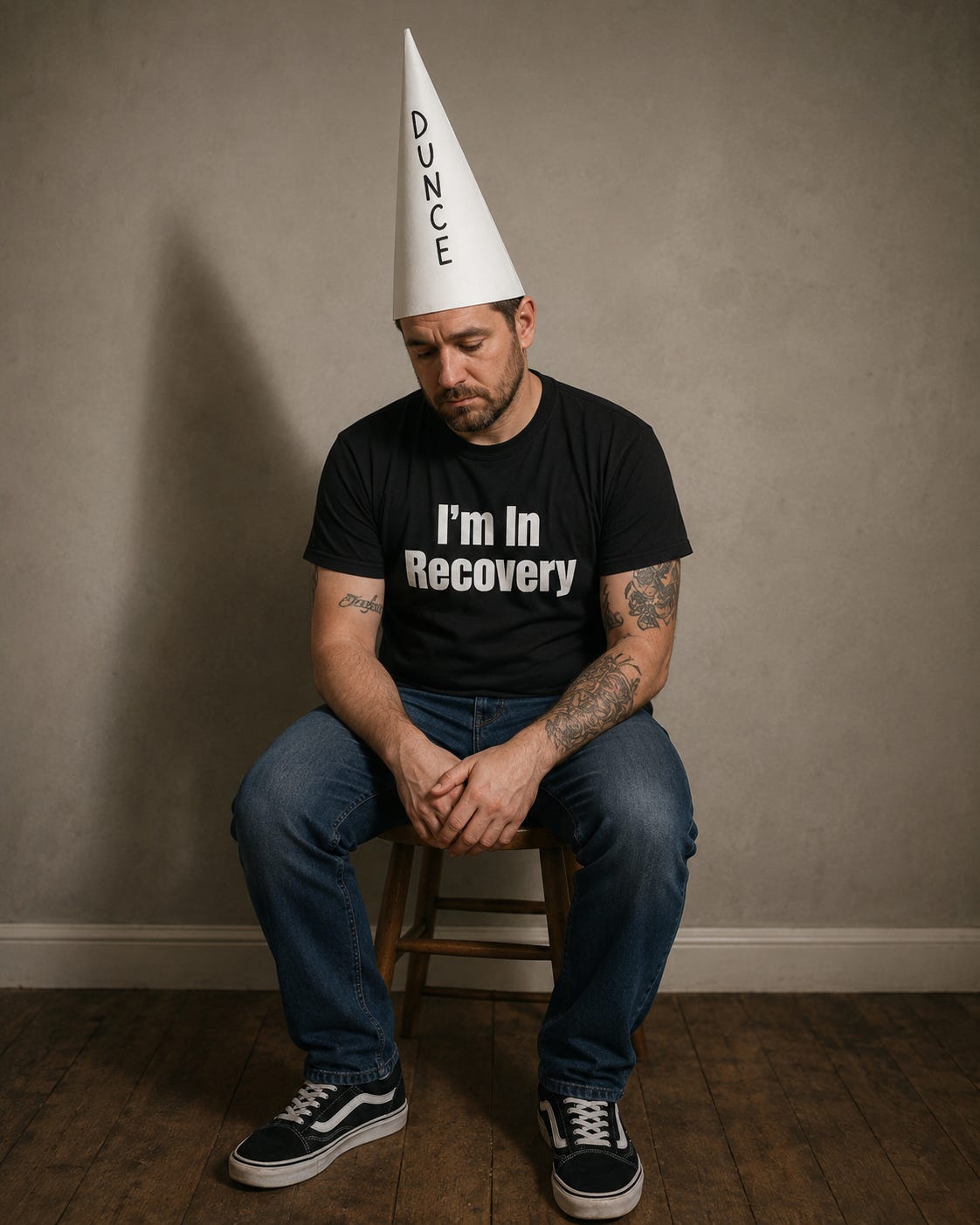
This “Bumpy Ride” I speak of sometimes ends well and other times it doesn't (I'm thinking of 2 people, one formerly incarcerated, who I knew and who are now dead from fatal OD). Stigma literally kills, especially when it comes to suicide and substance use. Labeling someone may be procedural, but it also contributes to stigma. Stigmatizing language about people who have lived SUD experience or a history of incarceration doesn't make them safer any more then driving an SUV makes you a car dealership. Whether it's Hillary Clinton using the term “Superpredators”, (a term created by Criminology professor John Dilulio Jr in 1995 to describe impulsive youthful offenders who committed brutal crimes and seemed to “lack a conscience”,) or ICE statements about “Criminal Aliens”, language has long been used to depict people who have used drugs or who have been incarcerated as threats to society and unfit for community life. In my own life, I've probably been called quite a few things I'm not going to even put in print form here. Sometimes I have to cringe when a comment to a local news article on my news app is filled with hateful language about “Criminal Gangbangers” or “Despicable People”, etc.
The other day I was reminded of two things that give heart to this difficult position:
First, if you don't like a label, you don't have to choose to wear it. We “are what we eat” so ingesting someone else's terminology for who we are is our choice just as much as calling us something demeaning is THEIR choice.
Secondly, There are people who will treat you as an Asset, and NOT a Liability. Where I coach now has treated me like that, allowing me to coach regularly, lead meetings and assist with trainings, and run groups. I also regularly get contacted by professional organizations in the recovery field or individual recovery professionals on a regular basis, despite my past.
There is no secret sauce to how to combat labeling, but one thing I consistently drill into the people I coach is Consistency, Usefulness, Initiative, and Kindness. All the stereotypes about people in Recovery and Reentry are that they are lazy, sneaky, unproductive and grifters. Being Consistent allows you to be seen as not changing in your character and trustworthy in small tasks. Usefulness makes you harder to replace or ignore by being of service and available to help without expecting an automatic return and problem-solving tasks at work or in general. Initiative combats the “Lazy” stereotype by going above and beyond to be resourceful and hardworking, even if it's a day laborer or retail job or not your chore/responsibility. Kindness lets people see you are approachable, safe to be around, not aggressive, and someone who can earn trust. All these things are doable by anyone-You don't need training in these, because you already know how to do them. This is why it aggravates me when someone will hire someone who later doesn't do their job and promotes them rather then someone who is eager to work and willing to come in early and stay later or actually care about the people (customers, clients, etc) they interact with. The person who called out of work to fake being sick and who does a marginal job at best or pawns of responsibility to a coworker gets promoted, the guy or girl in Recovery who is willing to show up every day, on time, sober and ready to do whatever task is asked? They get the rejection email from Indeed-Cold, impersonal, uncaring.
I always find it somewhat interesting when someone I coach states that I do more for them then their Case Manager has done for them, and while there ARE many good Case Managers who go above and beyond for their clients, the trend from what my guys often tell me seems to be lackluster. Asset or Liability? You tell me. What matters in the end is that we, as a society that claims to give second chances and a leg up, live out those ideals by giving people with a past a chance at a future without having them jump through morality spot checks and suspicion-based processes. That seems like a Fair Chance move to me.